Interview: Dr. Isabelle Schiffer on the real science and potential of longevity
When I first heard about longevity, my gut reaction was: “Do we really need to help rich people live even longer—and give them more time to worsen their climate impact?” If your thoughts are in a similar direction, you should absolutely read on and learn what longevity is ACTUALLY about. I invited Dr. Isabelle Schiffer, a brilliant longevity scientist and investment manager at deep tech impact VC b.value, to share her insights, from the cutting-edge science to the ethical and societal stakes and opportunities for investors in the field. Get ready to have your assumptions challenged!
1. What are the different approaches within the longevity field, and how do they differ in terms of accessibility and scientific maturity?
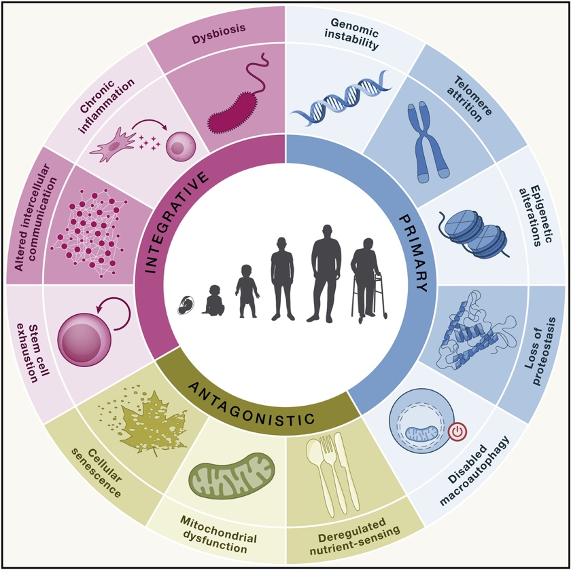
To understand longevity, you first need to understand aging. In 2013, scientists defined 9 “hallmarks of aging” – cellular and molecular changes that drive the aging process. In 2023, that list expanded to 12. Expect more to come as science evolves.
Each hallmark offers a potential target for intervention. During my PhD, I worked on autophagy, a process by which cells clean up damaged components. It wasn’t even on the list of hallmarks when I started, because it is also quite a new research area. In the updated version, autophagy is now considered central to healthy aging. That experience taught me how fast the field can move and how much we still don’t know. But the underlying ambition remains: to shift medicine from reacting to disease to maintaining function before decline begins.
Approaches in Longevity – and their scientific maturity
Prevention
This is the most advanced category – and often overlooked in favor of sexier tech. But foundational interventions like caloric restriction, fasting, and regular exercise have robust effects on aging-related pathways such as mTOR. These aren’t biohacks. They have been shown to delay age-related decline in mice, monkeys, and – in indirect ways – humans. There is growing interest in caloric restriction mimetics, drugs that mimic the effects of fasting without the fasting.
Then there’s the emerging category of nutraceuticals and supplements, like NAD+ boosters (e.g., nicotinamide riboside, NMN). These aim to restore declining metabolic functions, but they are not a silver bullet. If you are young and healthy, more NAD+ might not help – and could even disrupt homeostasis (healthy balance). That’s why biomarker-driven interventions will be key to personalizing these strategies. Timing, context, and individual variation matter.
Reversal
Reversal is about repairing damage that is already done. This is an area, where we see many start-ups. Senolytics aim to selectively kill senescent (deteriorating) cells, which accumulate with age and secrete inflammatory factors. In mice, clearing these cells extends lifespan and improves organ function. In humans, clinical trials are ongoing. Unity Biotechnology and Cleara are two companies working in this field.
Other reversal strategies focus on restoring the extracellular matrix (the protein-rich space in-between cells) – Revel is working on breaking crosslinked collagen fibers. Cyclarity develops drugs that remove arterial plaque.
Replacement
As tissues degrade, replacement becomes the next logical step. This includes stem cell therapies, engineered tissues, and organ regeneration. Cellbricks is pioneering 3D-bioprinting of functional human tissues. The implications for reconstructive surgery, transplantation, and even drug testing are enormous.
Cellvie is working on Mitochondrial Transplantation to ultimately replace damaged mitochondria (the energy-producing organelle in our cells).
Rejuvenation
This is the most ambitious frontier: not just repairing or replacing, but resetting. In 2006, Shinya Yamanaka discovered that introducing four transcription factors could reprogram adult cells into induced pluripotent stem cells (iPSCs). The problem? Full reprogramming erases a cell’s identity – and risks tumor formation. But partial reprogramming, done carefully, could reset age without losing cellular function.
It’s still early, but the implications are profound. Imagine being able to reverse cellular age in the heart, liver, or even the brain – without surgery, without replacement, just by nudging gene expression back to a youthful state. MoglingBio is an example in this space. They are developing new pharmacological approaches to rejuvenate old stem cells of the hematopoietic (blood cell formation) system.
2. Which technological or scientific advancement in the longevity space excites you most—and what are the biggest technical, ethical, or societal barriers to its adoption?
Momentum:
- Biomarkers are getting better: RNAseq, proteomics and single-cell omics, we are closing in on ways to measure aging before symptoms appear. AI will help accelerate this field. We are also advancing on the materials side to be able to measure even more parameters at home non-invasive with our smart watches (think glucose or metabolites in sweat).
- Chronobiology is gaining traction: syncing therapies with circadian rhythms may enhance efficacy and reduce side effects.
- Microbiome research is booming: Our microbiome is changing with age – it is getting less diverse and certain species are more abundant – restoring microbiome to a more youthful state has shown beneficial effects in animal studies. Furthermore the microbiome is shown to influence outcomes of for example cancer therapies and is linked to certain diseases.
- Non-coding RNAs (functional gene regulators) – like microRNAs and long non-coding RNAs -play regulatory roles in aging, and companies like Haya Therapeutics are already advancing RNA-based therapies just having raised their 65M$ round with Eli Lilly being one of the investors. The non-coding or “dark genome” could bear great potential as we could use mRNAs which very specific functions as drugs instead of molecules which ususally have more off-target effects.
- Inflammaging – refers to chronic, low-grade inflammation observed in older individuals. There is robust evidence from human studies linking inflammaging to both systemic aging and specific age-related diseases, making it a significant target for clinical research and therapeutic intervention
- Reproductive aging – especially in women – is finally receiving serious attention.
- Disease Reversal & Tissue Replacement – while still being early, this field has huge potential and we see many start-ups emerging in that field
Barriers:
- Model systems are a huge bottleneck. Mice don’t mimic human aging perfectly. We need better in vitro systems, organoids, and longitudinal human studies.
- Regulatory frameworks are evolving. Aging isn’t officially a disease, making clinical trials harder. But the WHO’s addition of “age-related decline in intrinsic capacity” to ICD-11 is a turning point.
- Public perception and misinformation are problematic. For every legitimate biotech company, there are ten influencers selling snake oil. That undermines trust. We need more scientific voices like Matt Kaeberlein’s – rigorous, clear, and scientifically grounded.
3. How scalable is the longevity sector? Do you think this is something that can benefit broader populations—or is it, realistically, a domain reserved for the world’s wealthiest?
Although still in its beginning, the longevity industry is seeing a huge influx of funding from academic institutions, and governments. Also investors not only spent money on start-ups but on funding research institutes like Calico Labs or Altos Labs.
Everyone ages, so the market is universal. But many longevity interventions will follow the classic tech curve: they start expensive and elite, then scale and become cheaper. Think of DNA sequencing: $100,000 a decade ago, now under $100. Or wearables, once a luxury, now mainstream.
But scalability isn’t just about cost. It’s about mindset. Right now, most people only seek healthcare when something breaks. Longevity challenges us to flip that – to invest in prevention. That shift won’t happen overnight, but it has already begun. But, this prevention needs to be affordable for everyone.
There are many loud voices in the longevity field, and while we need loudness to get attention, we also need to cut through the noise to get longevity out of the “sci-fi-billionaire-hobby” into the mainstream.
I think Longevity can really help transform our current healthcare system from sick-care to preventive care. We need to treat healthspan as seriously as lifespan. And maybe also ask ourselves: why do we schedule regular oil changes for our cars, but only go to the doctor once something hurts?
4. How do you see the intersections between longevity, overpopulation, and the climate crisis? Is there a risk that extending human lifespans—especially for affluent populations—could worsen global inequities or environmental pressures?
This is a common critique – and one worth engaging seriously. If longevity only benefits the rich, or strains the planet, we are in trouble. But that’s not the goal. The real goal is to reduce the time people spend sick, dependent, and in decline. That benefits individuals and society. Longevity is about living long and healthy lives – not living forever.
Remember: average life expectancy has risen dramatically over the last century, mostly through public health, antibiotics, and better nutrition – not exotic tech.
Also: aging populations strain healthcare systems. If we can reduce age-related disease burden, we free up resources, not just consume them. Healthy aging is a public good.
We often avoid thinking or talking about fragility, disease, and death-but for everyone fortunate enough to reach an advanced age, these realities become unavoidable. I truly don’t understand why we wouldn’t strive to be as fit and vibrant at 80, or even 100 or 120 as we were at half that age. Why do we accept frailty and decline as the inevitable price of growing old? Aging Is inevitable – decline doesn’t have to be.
5. Do you have a personal longevity routine?
I wouldn’t call it a „longevity routine“, but I try to get the basics right. I am not taking any supplements or drugs – just focusing on sleep, exercise, and nutrition.
I practice intermittent fasting by skipping breakfast, though I think this really depends on what works for each individual. My diet is rich in vegetables, fiber, and protein… although my sweet tooth does its best to sabotage the balance. To support gut health, I brew my own kombucha with a SCOBY that’s basically become a pet.
Movement is a big focus – I try to go for a walk every day to offset all the screen time that comes with working in VC. Cardio is something I do for fun, but I’m actively working on strength training since muscle mass is closely tied to healthy aging. I’m also learning to appreciate mobility work, not just for flexibility, but because it supports cognitive function too.
When it comes to sleep, I don’t cancel evening plans to get to bed early, but I do try to stick to a consistent bedtime and get enough rest. Tracking sleep has really opened my eyes to realize how much it fluctuates throughout my menstrual cycle.
It’s far from perfect, but for me, longevity is about small habits that add up – and that I can actually sustain.
Before this interview, I mostly saw longevity as a playground for billionaires chasing immortality. But after speaking with Isabelle, I realized the conversation is much deeper—and more relevant to all of us. Longevity isn’t just about living longer; it’s about living better for longer, and rethinking how we approach health, aging, and prevention.
Scientifically, it’s an incredibly exciting field—full of unanswered questions and groundbreaking opportunities. That makes it not only a fertile ground for innovation but also a compelling space for both impact-driven and deep tech investors. Of course, big questions remain around access, ethics, and sustainability. But if we approach longevity with both curiosity and critical thinking, there’s a real opportunity to shape it into something far more meaningful than a luxury: a true public good.
Follow Isabelle for more insights into the science and investment side of longevity. And if this sparked your curiosity and you’re considering diving into the world of longevity startups, I’d be happy to support you in evaluating their scientific soundness. Just reach out!
 Dr. Theresa Rothenbücher, your Partner for Technical Due Diligence of Biotech Startups.